
7 min read
A flat tyre is one of the most common reasons drivers find themselves stopped at the side of the road. Changing it yourself is perfectly doable, as long as you can do it somewhere safe and you have the right kit. Below is a calm, practical walk through. Read it now while you are comfortable, not for the first time in the rain on a hard shoulder near Belfast.
First, get somewhere safe
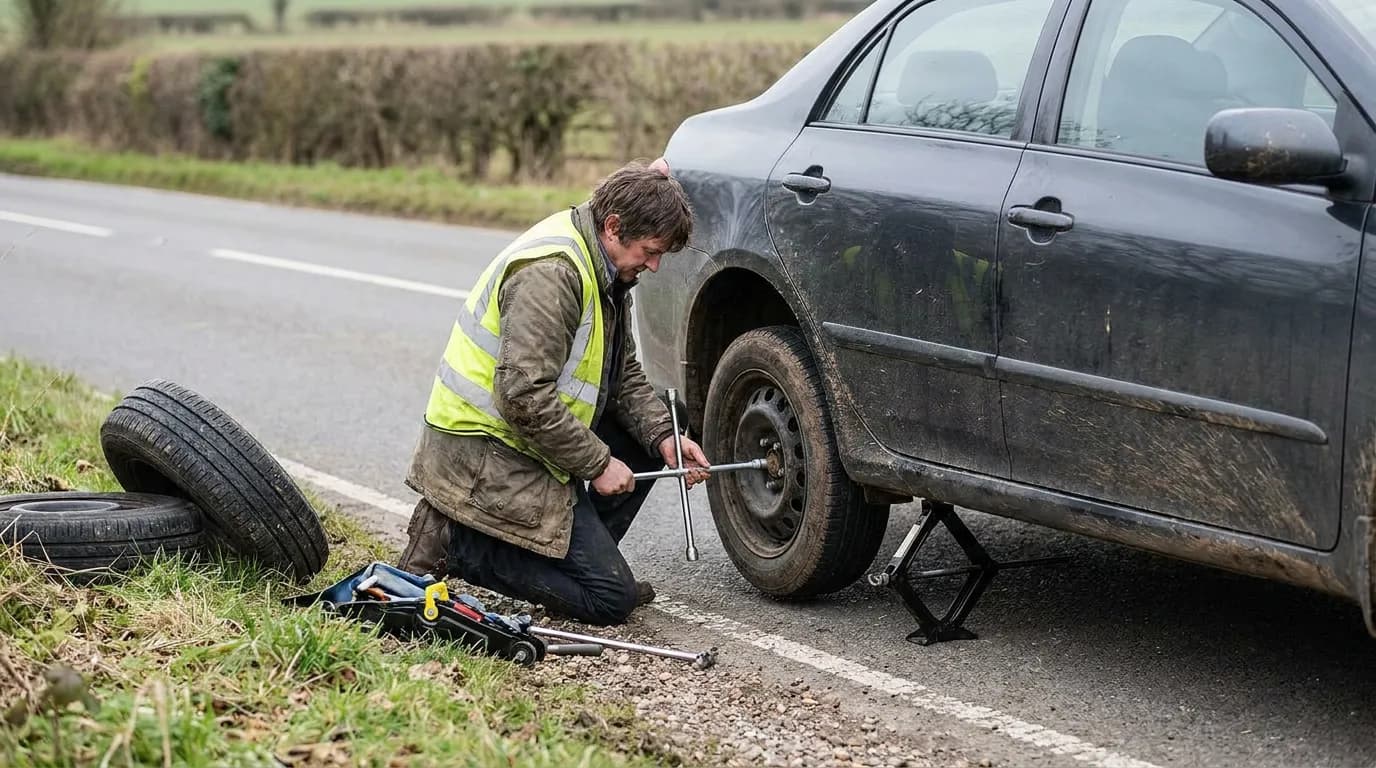
Safety comes before the wheel. If you feel a tyre go, do not stamp on the brakes. Ease off, hold the wheel firmly and let the car slow before you steer gently onto a flat, firm spot well away from traffic. A car park or a quiet side street is ideal. A motorway hard shoulder is the worst place to attempt a change, and you should think very carefully before doing so. Put your hazard lights on and get any passengers out and behind a barrier.
- Park on firm, level ground, not soft grass or a slope
- Apply the handbrake fully and put the car in gear or in park
- Switch on hazard lights and wear a hi vis vest if you have one
- Keep passengers well away from the carriageway while you work
Gather your tools
Most cars carry a jack, a wheel brace and a spare or a space saver wheel, usually under the boot floor. Some newer cars come with a tyre inflation kit instead of a spare, which is only any use for small punctures, not a blowout or a damaged sidewall. Find your locking wheel nut key if your car has one. Without it you will not get the wheel off, and that alone is a frequent reason drivers end up calling us.
Loosen, lift and swap
Before you raise the car, crack each wheel nut loose by about half a turn while the tyre is still on the ground. They can be very tight, so use steady force rather than sharp jerks. Next, place the jack under the proper jacking point nearest the flat. Your handbook shows exactly where this is, and using the wrong spot can damage the car or let it slip. Raise the car until the flat tyre is just clear of the ground.
- Fully remove the loosened nuts and keep them somewhere safe
- Lift the flat wheel off and set it flat on the ground so it cannot roll
- Fit the spare, then hand tighten the nuts in a star pattern
- Lower the car and then fully tighten the nuts firmly in that same pattern
After the change
Once the spare is on and the nuts are properly tightened, stow the flat tyre and your tools. If you have fitted a space saver, remember it is a temporary measure. There is usually a speed limit marked on it, often around 50 miles per hour, and it is not meant for long distances. Drive gently to a garage and get a proper replacement fitted. It is also worth rechecking the nuts after a few miles, as they can settle.
When to call instead of changing it
There is no shame in deciding a roadside change is not safe or sensible. If you are on a motorway, if the ground is wet and sloping, if the nuts will not budge, if you have no spare, or if you simply do not feel confident, leave it. A wheel change gone wrong on a busy road is far more dangerous than a short wait. That is exactly what a recovery service is for.